Unlocking Quantum Potential: How AI is Contributing to the Future of Quantum Technologies and Society
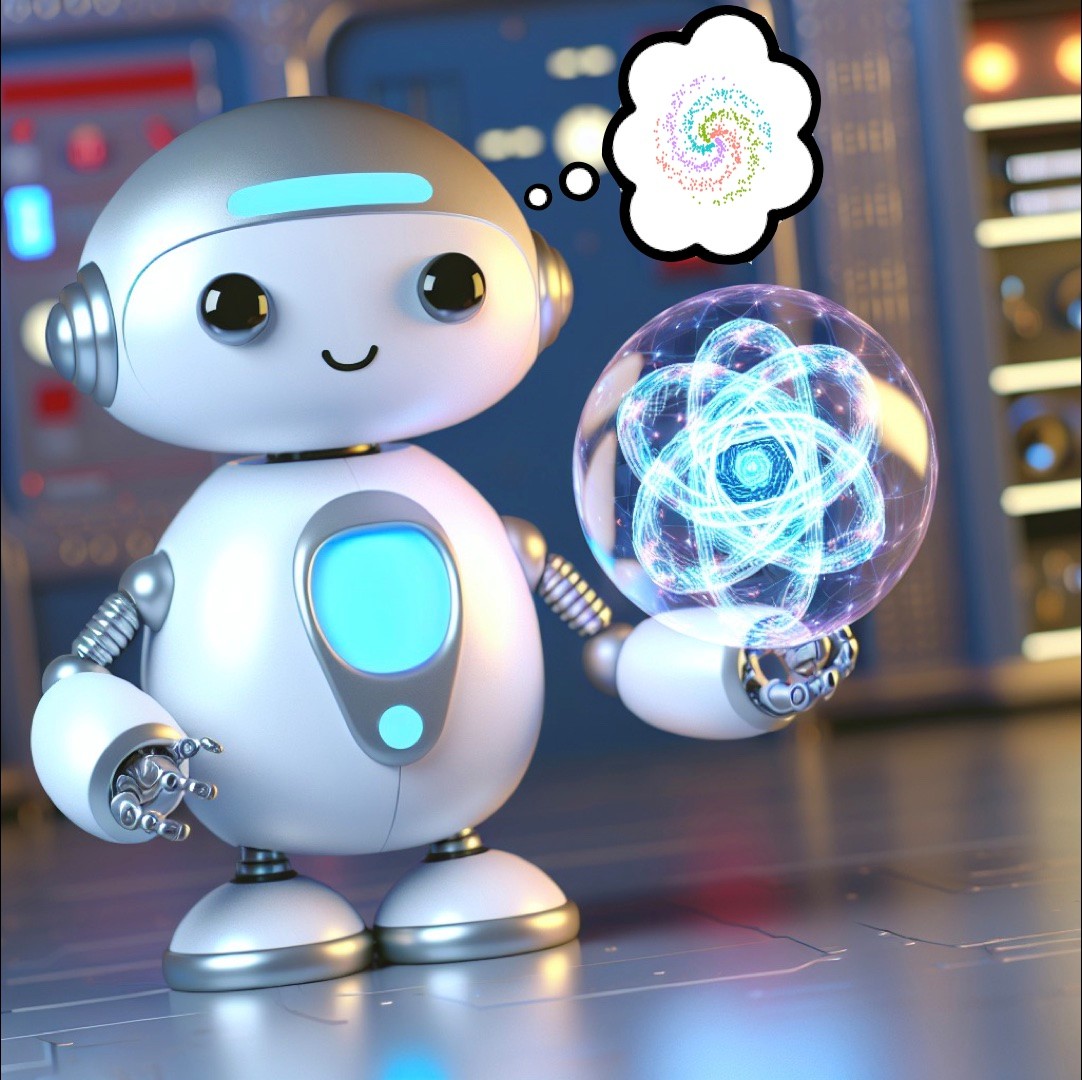
“Seeing the Quantum World through the Eyes of AI.” A deep neural network receives experimental data from a quantum system, such as an atom, a molecule, or a particle of light. The network is then asked to form its own representation of the state of the system, and to make predictions about the outcomes of future experiments. Through training, the network learns to create useful representations of the quantum world and to discover hidden properties of complex quantum systems made of many particles.
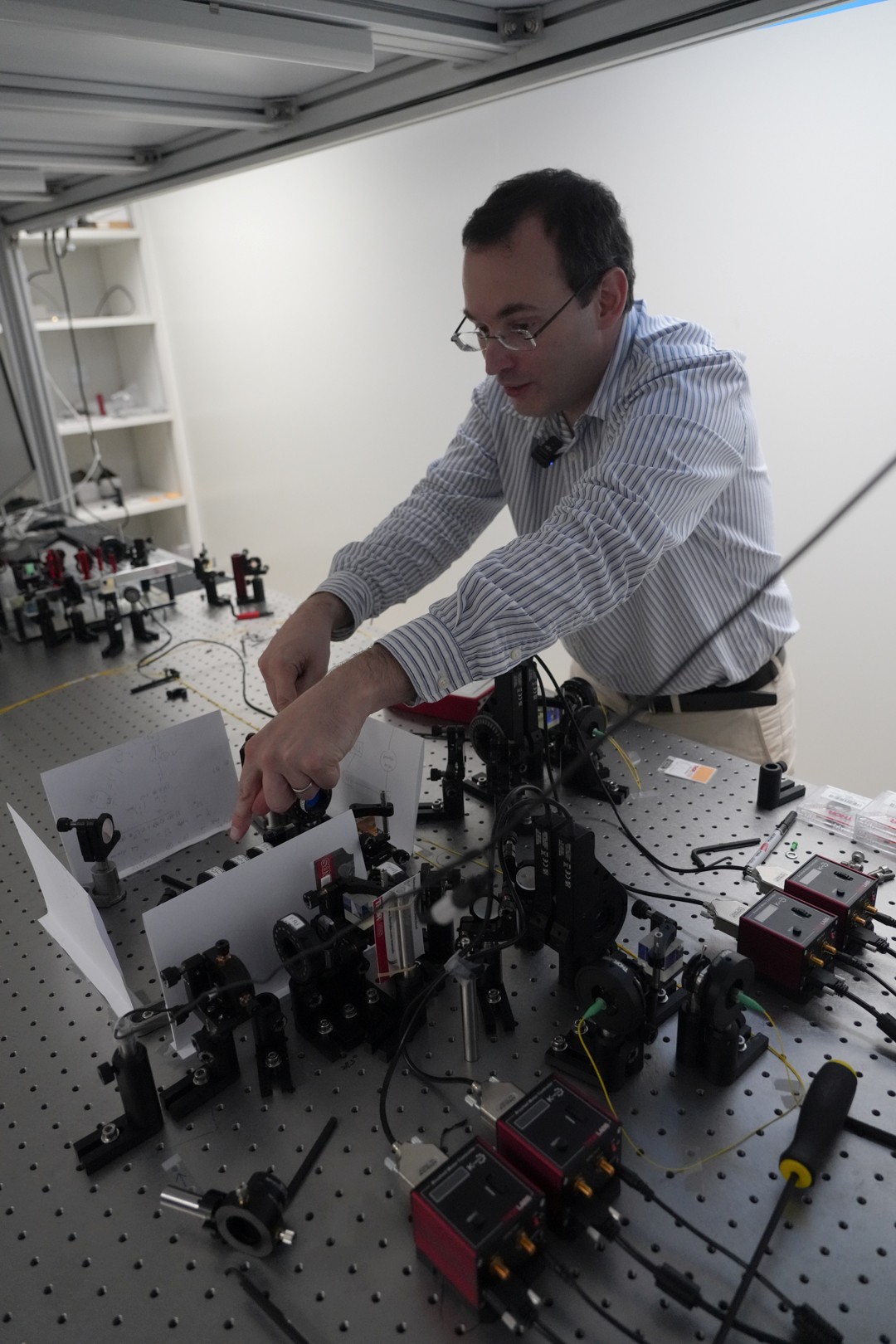
New devices in the Quantum Photonics Lab. Prof. Chiribella’s team runs a photonic laboratory for the experimental demonstration of fundamental quantum principles and new quantum devices based on them. Remarkably, this laboratory is the only quantum photonic laboratory worldwide to be hosted by a Computer Science department.
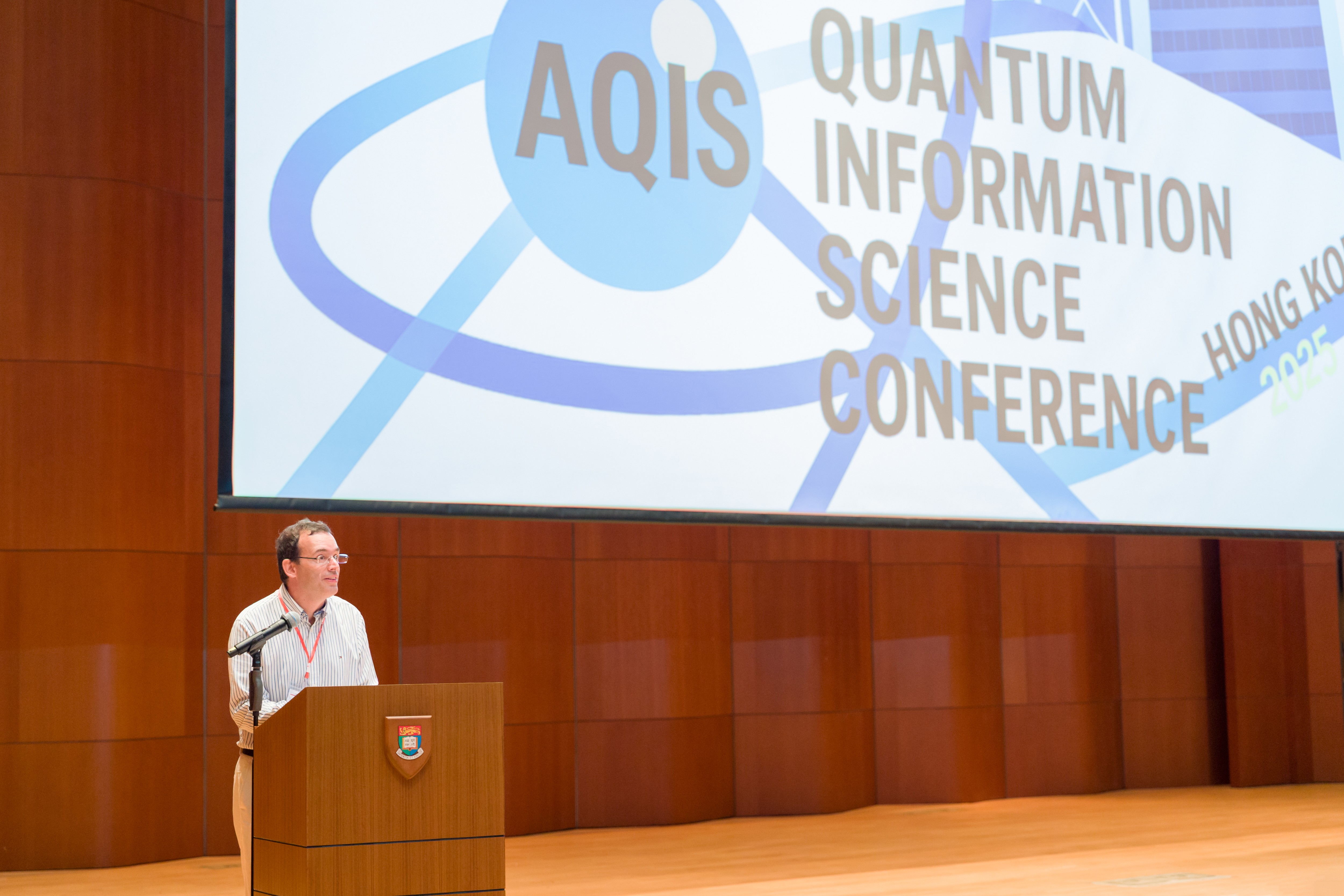
Making HKU an international hub for Quantum Information Science. In summer 2025, HKU celebrated the United Nations “Year of the Quantum” by hosting the 25th anniversary edition of the Asian Quantum Information Science Conference, the premier meeting for quantum information science in the Asia-Pacific region, in which Prof.
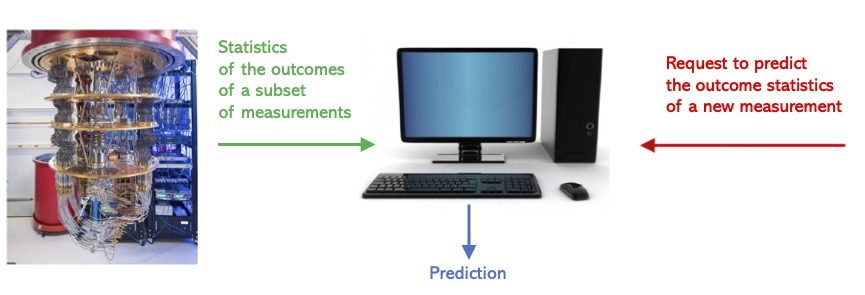
A groundbreaking research project led by Prof. Giulio Chiribella, Associate Director (Research & Graduate Studies) of HKU’s School of Computing and Data Science, is transforming how we understand and interact with the quantum realm. The key idea of this project is to “See the Quantum World Through the Eyes of AI," leveraging artificial intelligence (AI) to characterise and control large-scale quantum systems—an essential step toward realising practical quantum technologies, such as quantum computers and quantum communication networks.
Quantum mechanics, the foundation of a large part of contemporary science and technology, involves states that grow exponentially more complex for systems made of many particles. Traditional methods for characterising these states become impractical for systems with hundreds or thousands of qubits, creating a significant bottleneck in advancing quantum science. To address this bottleneck, Prof. Chiribella’s team develops neural networks capable of generating compact, data-driven representations of quantum states solely from experimental data. These AI models can predict the behaviour of complex quantum systems, verify the performance of new quantum devices, and control quantum dynamics without exhaustive measurements.
This research fosters knowledge exchange by bridging quantum physics and AI, encouraging interdisciplinary collaboration that accelerates innovation. By making quantum systems more understandable and manageable, it opens avenues for scientists, engineers, and policymakers worldwide to explore the societal benefits of quantum technologies—ranging from secure communication and advanced sensors to revolutionary computing capabilities.
The societal impact of this work is profound. As quantum systems become more controllable and predictable, we move closer to an era when eventually we will integrate quantum devices into everyday life, enhancing cybersecurity, medical imaging, and environmental monitoring. Additionally, this AI-driven approach democratizes access to quantum knowledge, enabling a broader community of researchers and industries to participate in quantum development, ultimately driving economic growth and technological progress.
In essence, this research exemplifies how knowledge exchange between AI and quantum physics can unlock societal benefits, fostering a future where quantum technologies are seamlessly integrated into our daily lives.