
Integrating Knowledge: The Impact of Chinese Medicine’s Research in Oncology
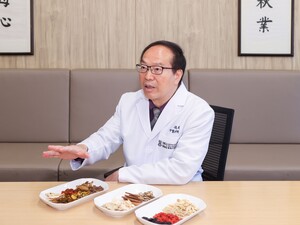
Prof. Feng Yibin, Director at HKU’s School of Chinese Medicine (abbreviated as “the School”), Li Ka Shing Faculty of Medicine, and a leading figure in integrating Chinese and Western medicine, recently shared insights into his pioneering work in integrative oncology.

Prof. Feng Yibin
This field aims to combine the strengths of both medical traditions, especially in treating complex diseases like cancer. His research not only emphasises the importance of Chinese medicine but also highlights its potential to improve patient outcomes through holistic approaches and multidisciplinary research.
Understanding Qi and Its Role in Medicine
Central to Prof. Feng’s philosophy are the Chinese medicine concepts of Jing (精), Qi (氣), and Shen (神), often likened to the body’s essential structure, the driving force of vital functions, and embodying energy, vitality, and spiritual consciousness, which collectively foster holistic health. He explains that understanding Qi and its manifestation in practices such as Qigong and Tai Chi can significantly contribute to patient well-being. These practices not only promote physical health but also foster a deeper connection between mind and body, which is crucial in managing chronic illnesses. He emphasises the challenges of Chinese medicine, starting with how to explain its theory, diagnosis, and treatment to the public using modern language. The second challenge is to provide robust scientific and clinical evidence to integrate Chinese medicine in the modern medical system, covering areas such as basic research, clinical trials, translational studies, multidisciplinary research and evidence-based medicine.
In his discussions, Prof. Feng reflects on personal experiences that resonate with the principles of Qi. Patients often report enhanced comfort and reduced side effects when incorporating Chinese medicine alongside conventional treatments. This dual approach is particularly beneficial in palliative care, where the focus shifts from curative to comfort-oriented strategies.
The Complementary Nature of Integrative Oncology
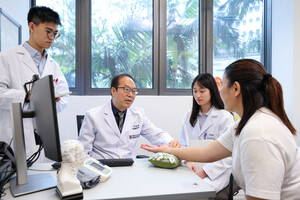
The World Health Organisation has increasingly acknowledged the value of traditional medicine, including Chinese medicine. Prof. Feng emphasises its complementary role in oncology, particularly in managing conditions such as liver, colon, and breast cancer. His research employs a diverse array of materials—single compounds, herbs, and complex formulas—to explore their therapeutic effects and scientific principles.
The integration of Chinese medicine into cancer treatment is not merely theoretical; Prof. Feng’s studies provide empirical evidence supporting its efficacy. He notes that Chinese medicine can be applied at various stages of cancer treatment, reinforcing the necessity for rigorous scientific validation to enhance credibility and acceptance within the wider medical community.
International Collaboration: A Gateway to Knowledge Exchange
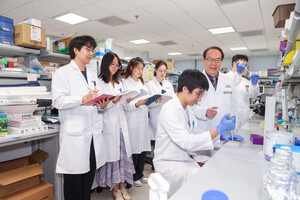
Prof. Feng’s commitment to advancing integrative medicine is reflected in his extensive international collaborations. Principal Investigators from the School have partnered with prestigious universities and institutions worldwide, fostering pioneering research that enhances Chinese medicine’s global influence and status. One notable partnership includes an exchange programme with Rostock University in Germany, which the School has conducted five times since 2017. These collaborations foster knowledge exchange, enabling researchers to share insights and methodologies that can propel the field forward.
Furthermore, the secretariat office of the Consortium for Globalisation of Chinese Medicine, set at the School, underscores its dedication to promoting Chinese medicine globally. The School cultivates multiple international platforms by organising regular symposia, such as the Pong Ding Yuen International Symposium on Chinese Medicine since 2001. The School hosted the 5th University of Hong Kong-Peking University Chinese Medicine and Integrative Medicine Summit in June this year, concurrently with the HKUMed Centre of Integrative Medicine Plaque Unveiling Ceremony. The School is also one of the collaborating institutions for the International Conference of the Modernisation of Chinese Medicine & Health Products (ICMCM), which recently concluded its 24th edition at the Hong Kong Convention and Exhibition Centre. These initiatives not only exemplify the School’s dedication to promoting Chinese medicine on a global scale, but also enhance research quality and provide platforms for dialogue among scholars, practitioners, and policy-makers, amplifying the impact of integrative medicine.
The Future: AI and Personalised Medicine
Looking ahead, Prof. Feng envisions a future where artificial intelligence (AI) plays a crucial role in Chinese medicine research. AI can streamline literature reviews, analyse complex compounds, and integrate big data, thus enhancing the precision of treatment modalities. This technological advancement holds promise for drug discovery and personalising treatment plans, making Chinese medicine more accessible and effective for a broader patient base.
As patient receptiveness to integrative approaches grows, the potential for chinese medicine to complement conventional medicine becomes increasingly apparent. Prof. Feng’s work not only emphasises the therapeutic benefits of integrating these systems but also highlights the broader implications for healthcare, advocating for a more holistic, patient-centric approach.
In conclusion, Prof. Feng Yibin’s research represents a significant step towards a more integrative and evidence-based practice in oncology. Through knowledge exchange and international collaboration, his work not only impacts patient care but also contributes to the global understanding and appreciation of Chinese medicine. As the field progresses, the fusion of ancient wisdom with modern science may redefine the landscape of healthcare, offering hope and healing to countless individuals. Through the collaborative efforts of Prof. Feng and the research teams of the School of Chinese Medicine, its scholars have achieved increasingly outstanding global rankings. Notable achievements include Prof. Feng being named as a Highly Cited Researcher 2024 by Clarivate Analytics, three professors ranked by Clarivate Analytics among the top 1% worldwide, and seven scholars listed by Stanford University as World’s Top 2% Scientists. The School will continue to strive to position Hong Kong and the University of Hong Kong as an international hub for Chinese medicine, promoting integrative medicine, and fostering modernisation and internationalisation of Chinese medicine.