

Harnessing Knowledge Exchange in Space Exploration: Advancing Society Through Collaborative Science
Recent breakthroughs in planetary science, led by Prof. Zhonghua Yao and Prof. Binzheng Zhang at HKU’s Department of Earth and Planetary Sciences, exemplify how international knowledge exchange can significantly benefit society.
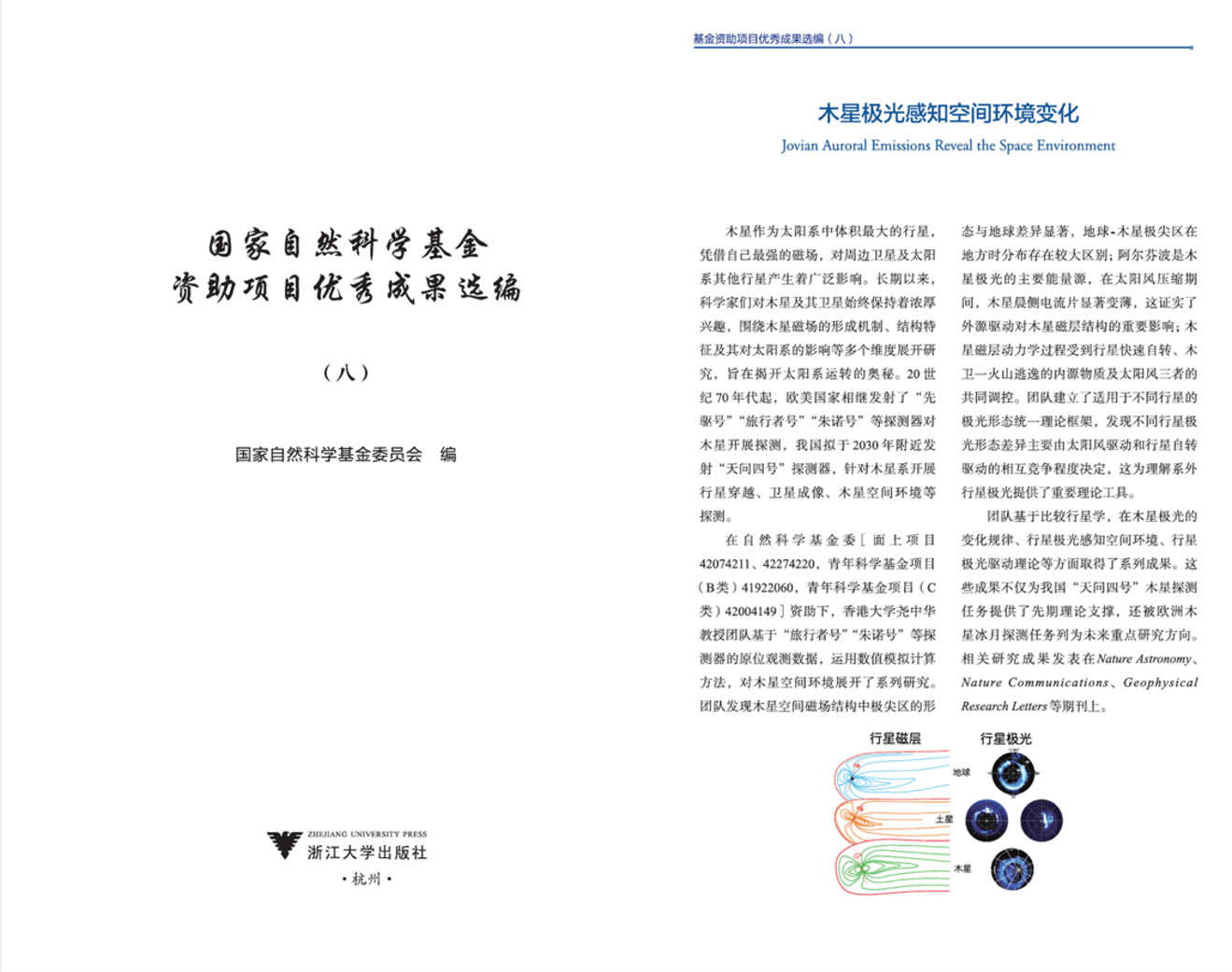
Their innovative research into Jupiter’s magnetic field not only advances scientific understanding but also highlights the crucial role of regional academic institutions in global space exploration. China’s National Natural Science Foundation recognises their work as an outstanding achievement, highlighting how collaborative scientific endeavours that transcend borders can have a significant societal impact.
The research conducted by HKU’s team offers vital insights into the complex energy dynamics driven by Jupiter’s magnetic environment. By exploring how this magnetic field interacts with solar wind and planetary rotation, the scientists have provided foundational knowledge that directly supports China’s upcoming Tianwen-4 mission to Jupiter. Such scientific advancements are essential to overcoming the extreme challenges of deep-space exploration, including low solar illumination, limited communication bandwidth, and intense radiation—challenges that demand innovative solutions and international cooperation.
This work underscores the importance of knowledge exchange as a catalyst for societal progress. Hong Kong’s academic institutions, especially HKU, serve as strategic "super-connectors," bridging China’s space initiatives with the global scientific community. This regional role fosters the flow of expertise, data, and innovative methodologies, fueling technological development and enhancing the capacity for complex space missions. The collaborative environment nurtured by these institutions accelerates the pace of discovery, enabling countries to address shared challenges and to develop more resilient and capable space technologies.
Beyond technological progress, the societal benefits of such scientific collaboration are profound. Engaging universities in major space missions fosters public interest in science and inspires future generations of scientists, engineers, and explorers. Educational outreach and media coverage of these advancements cultivate a scientifically literate society that understands the importance of space research for addressing broader societal issues, such as climate change, resource management, and technological innovation.
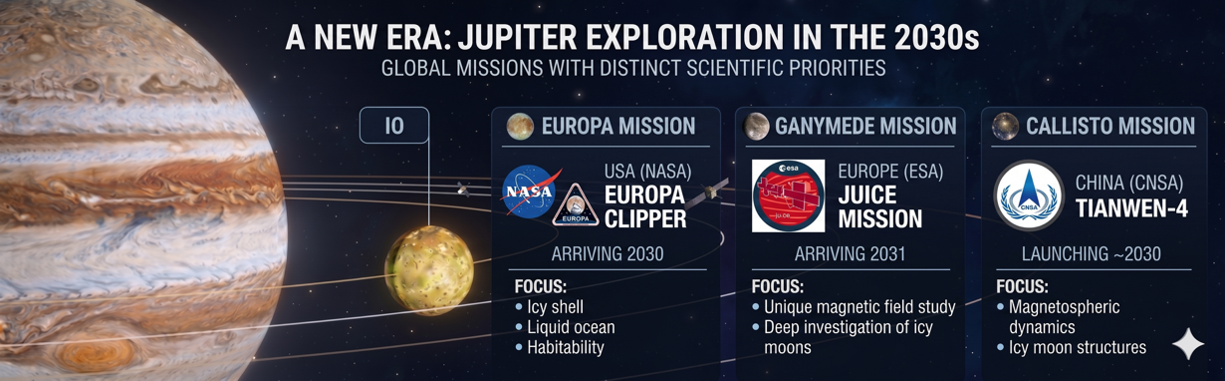
Furthermore, the international scope of upcoming missions to Jupiter’s icy moons—such as NASA’s Europa Clipper, ESA’s JUICE, and China’s Tianwen-4—embodies a collective human effort to explore and understand our universe. These missions aim to uncover the mysteries of subsurface oceans that could harbour life, providing critical insights into planetary habitability and the origins of life itself. The scientific priorities shared among these agencies demonstrate how collaborative exploration benefits all of humanity by pooling resources, expertise, and perspectives.
Ultimately, the work of Professors Yao and Zhang exemplifies how knowledge exchange and international cooperation in space exploration can serve as powerful engines for societal advancement. By fostering innovation, inspiring future scientists, and promoting global collaboration, scientific endeavours in space not only push the boundaries of human knowledge but also lay the groundwork for a more informed, resilient, and progressive society.
